
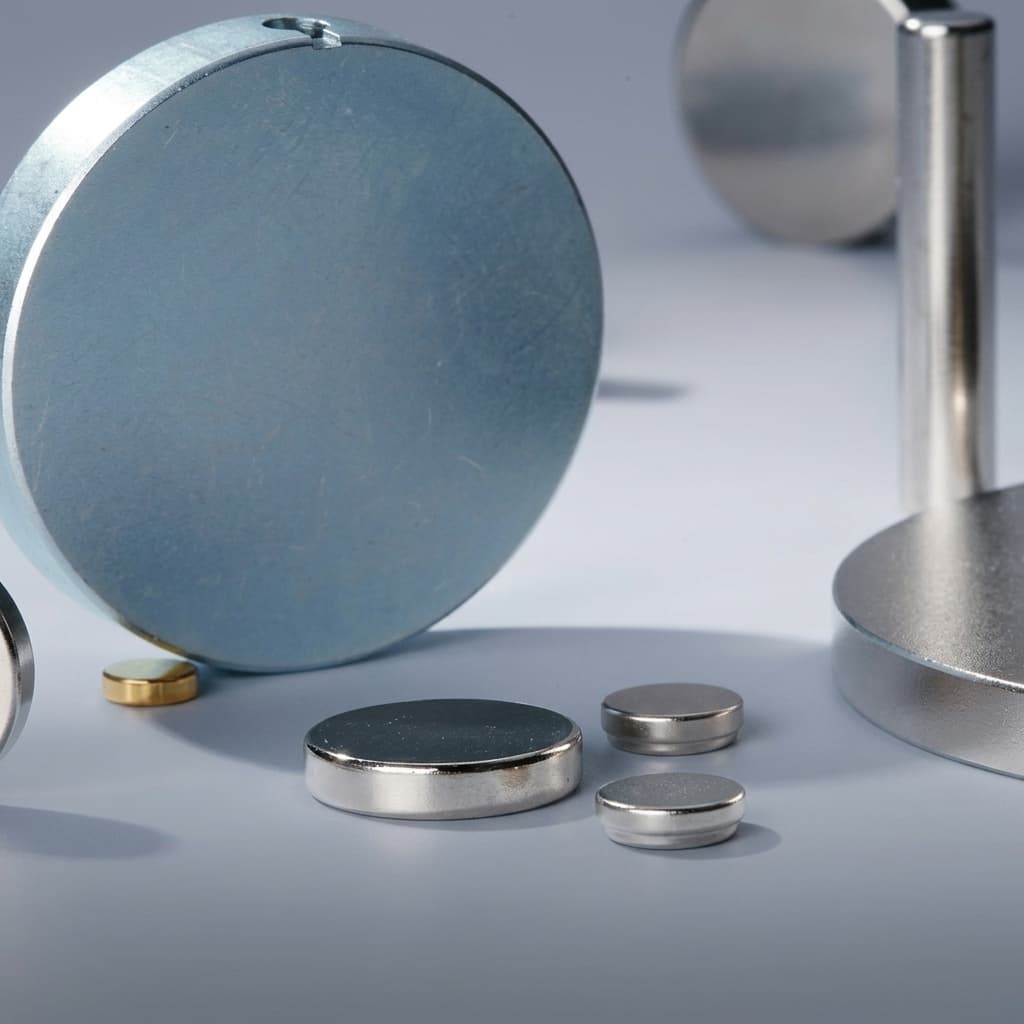
Automotive vs. Industrial Sensor Magnets: PPAP, Traceability, and Cost Drivers
A procurement and engineering guide to understanding the price delta between automotive-grade and industrial sensor magnets. Learn about PPAP, IATF 16949 traceability, and Zero Defect policies.
Decision brief
Who this is for
Buyers, procurement teams, distributors, and engineers specifying sensor magnets for high-volume production.
What you can decide
- Whether an application strictly requires automotive-grade certification (IATF 16949/PPAP) or if industrial-grade is sufficient.
- How to budget for the testing and traceability overhead associated with automotive magnets.
- Selecting a supplier capable of maintaining lot traceability down to the raw material melt.
Evidence included
- A comprehensive comparison table detailing inspection criteria, traceability, and defect rate tolerances.
- An architectural SVG diagram explaining the difference in traceability granularity.
Practical boundaries
- This guide applies to permanent magnets (NdFeB, SmCo, Ferrite) used in position, speed, and torque sensors. It does not cover electromagnet specifications.
When specifying magnets for position, speed, or torque sensors, procurement teams are often surprised by the price delta between industrial-grade and automotive-grade magnets. On paper, the magnets might look identical—same N42SH Neodymium grade, same dimensions, and same plating.
However, an automotive sensor magnet can cost 30% to 200% more than its industrial counterpart. Why? Because you are not just buying a piece of magnetized rare-earth metal; you are buying risk mitigation, extreme traceability, and validated process control.
This guide breaks down the core differences in PPAP, traceability, quality tolerances, and cost drivers to help you source the right magnet for your application without over-specifying or under-protecting your supply chain.
Scope, Date, and Decision Boundary
This Global guide was prepared for sensor magnet RFQs reviewed on July 26, 2026. It applies to permanent magnets used as magnetic targets, encoder rings, actuator feedback magnets, and position or speed sensor magnets. It does not replace a customer drawing, CSR document, ISO 26262 safety assessment, or supplier-specific IATF 16949 audit.
Treat the cost ranges below as sourcing heuristics, not a live commodity price index. Rare-earth prices, coating capacity, audit status, and annual volume can move the final quote materially.
1. The Core Philosophy: AQL vs. Zero Defect
The most fundamental difference between industrial and automotive sensor magnet manufacturing lies in the acceptable defect rate.
- Industrial (AQL - Acceptable Quality Limit): Industrial procurement typically operates on an AQL basis (e.g., AQL 0.65 or 1.0). This means a statistically determined number of minor defects (like microscopic plating pinholes or slight dimensional deviations) are tolerated within a batch. If the sampled parts pass, the entire batch passes.
- Automotive (Zero Defect): The automotive sector mandates a "Zero Defect" mentality. Because a failed sensor magnet in a drive-by-wire steering system or throttle actuator can lead to catastrophic failure, suppliers must implement 100% Automated Optical Inspection (AOI) and 100% magnetic flux sorting.
2. Specification Comparison Table
The following table compares the typical requirements for high-volume sensor magnets in both sectors.
| Feature / Requirement | Industrial Sensor Magnets | Automotive Sensor Magnets | Impact on Cost |
|---|---|---|---|
| Quality Standard | ISO 9001 | IATF 16949 | High (Overhead & Audits) |
| Part Approval | First Article Inspection (FAI) | PPAP Level 3 (typically) | Medium (NRE Engineering) |
| Defect Tolerance | AQL 0.65 - 1.5 | Zero Defect (0 PPM Target) | High (Yield Loss & 100% Sorting) |
| Traceability | Batch / Shipment Level | Raw Material Melt to Final Part | Medium (Data Management) |
| Temperature Profile | -20°C to +85°C (Typical) | -40°C to +150°C (Typical) | High (Requires H/SH/UH Grades) |
| Testing | Standard Salt Spray (24-48h) | PCT, Thermal Shock, 500h+ Salt Spray | Low to Medium |
| Change Control | Supplier Notification | Customer Approval Required (PCN) | Process Overhead |
3. Demystifying Traceability Chains
In industrial applications, if a magnet fails, you might trace it back to the "October Shipment." In automotive, you must be able to trace a failed magnet back to the specific sintering block and the original raw material ingot.
This granular traceability requires sophisticated ERP systems and strict physical separation of lots on the factory floor, preventing any mixing of batches during machining or plating.
Figure 1: Traceability resolution in industrial vs. automotive magnet manufacturing.
4. PPAP (Production Part Approval Process) Overhead
When an engineer specifies an automotive magnet, they usually require a PPAP Level 3 package before mass production. This is a significant cost driver that buyers must factor into NRE (Non-Recurring Engineering) tooling costs.
A standard PPAP for a sensor magnet includes:
- Design Records & Ballooned Drawings
- DFMEA (Design Failure Mode and Effects Analysis): Often shared with the customer.
- PFMEA (Process Failure Mode and Effects Analysis): Identifying risks in pressing, sintering, machining, and coating.
- Control Plan: The exact steps taken to ensure the PFMEA risks are mitigated.
- MSA (Measurement System Analysis) / Gage R&R: Proving that the fluxmeters, 3D vision systems, and micrometers used to measure the magnets are actually accurate enough to detect variations.
- Dimensional Results & Material Certifications: Usually covering at least a 30-piece sample run.
If your application does not explicitly mandate IATF 16949 compliance, requiring a full PPAP will unnecessarily inflate your lead times and tooling costs.
5. Procurement Checklist: Do You Really Need Automotive Grade?
Before issuing an RFQ specifying "Automotive Grade" or "PPAP Level 3," review this checklist with your engineering team to avoid over-engineering your supply chain:
- Regulatory Requirement: Does the end-product fall under automotive safety regulations (e.g., ISO 26262 ASIL ratings)?
- Operating Environment: Will the sensor face sustained temperatures above 120°C or extreme thermal shock (e.g., inside an engine compartment)?
- Failure Consequence: Would a magnet failure cause a safety hazard (steering/braking loss) versus a mere inconvenience (a robotic arm stopping on a factory floor)?
- Traceability Mandate: Do your end-customers audit your supply chain down to the raw material lot?
- Volume Justification: Are production volumes high enough (100k+ pieces/year) to amortize the PPAP and tooling overhead effectively?
If you answered "No" to most of these, a high-quality Industrial Grade magnet with strict FAI and AQL 0.65 will likely serve your needs at a fraction of the cost.
6. Frequently Asked Questions (FAQ)
Can I use an industrial magnet in an automotive prototype?
Yes. During the A-sample or B-sample prototyping phases, industrial-grade magnets of the same material grade are perfectly fine for proof-of-concept. However, you must lock in the automotive supply chain for C-samples and validation testing (DV/PV), as the mass-production process dictates the final PPAP.
Why do automotive magnets require higher intrinsic coercivity (Hcj)?
Automotive environments face extreme thermal fluctuations (-40°C to +150°C). Magnets lose their resistance to demagnetization at high temperatures. To survive the heat of a traction motor or gearbox without permanent flux loss, higher Hcj grades (like SH, UH, or EH NdFeB, or SmCo) are required.
What is PCN and why does it affect supply chain flexibility?
PCN stands for Product Change Notification. In the automotive sector, once a magnet is PPAP approved, the supplier cannot change anything—not the raw material source, not the machining fluid, not the plating bath—without issuing a PCN and getting customer approval. This restricts supply chain flexibility but guarantees consistent quality.
7. Related Engineering Resources
- Use the sensor magnet RFQ checklist when converting the decision boundary into a supplier quote package.
- Review the sensor magnet material selection guide before specifying high-Hcj NdFeB, SmCo, or ferrite.
- Build incoming inspection around the sensor magnet failure modes and inspection plan so PPAP evidence connects to receiving checks.
8. Sources Used
- AIAG: Production Part Approval Process overview
- NXP: Layout Recommendations for PCBs Using a Magnetometer Sensor
- IATF Global Oversight: About IATF 16949:2016
9. Next Steps for Engineers and Buyers
Choosing the right specification boundary is critical for your project's financial viability. Our engineering team specializes in bridging the gap between magnetic physics and procurement reality.
If you are developing a new position sensor and need help deciding between an industrial FAI route or a full IATF 16949 PPAP process, contact our magnetic design team for a free specification review and RFQ consultation.
Reviewed by

Categories
More Posts
Sensor Magnet Material Selection: NdFeB, SmCo, AlNiCo, and Ferrite Compared
A side-by-side engineering comparison of the four permanent magnet material families used in sensor applications, covering magnetic properties, temperature limits, corrosion behavior, and cost trade-offs.
Sensor Magnet Failure Modes and Incoming Inspection Plan
A practical guide to sensor magnet failure modes, inspection gates, magnetic field checks, coating risks, packaging controls, and supplier documentation for OEM buyers.
Tolerance Stack-Up in Sensor Magnet Assemblies: How to Protect Your Sensing Margin
A practical guide to mechanical and magnetic tolerance stack-up in sensor magnet assemblies, covering air gap variation, field strength margin, and how to prevent false triggers or missed events in production.